
Table of Contents
- The Geographic Exclusivity and Limited Growing Region
- Volcanic Soil and Microclimate: What Makes Kona Unique
- Labor-Intensive Hand-Picking and Processing Methods
- Kona Coffee Grading Standards and Quality Control
- The Difference Between 100% Kona and Kona Blends
- How to Spot Fake Kona Coffee and Verify Authenticity
- Supply, Demand, and the Economics of Premium Pricing
- Conclusion
- Frequently Asked Questions
Last Updated: September 27, 2026
The Geographic Exclusivity and Limited Growing Region
Why 100% kona coffee expensive starts with geography. The coffee legally designated as "Kona" can only come from a specific volcanic region on the Big Island's western slopes. This geographic exclusivity isn't marketing hype, it's enforced by law. The Hawaiian Coffee Market Stabilization Act restricts the Kona designation to roughly 2,000 acres of prime agricultural land, creating artificial scarcity that drives premium pricing.

Unlike coffee grown across thousands of square miles in other regions, Kona producers operate within tightly constrained boundaries. This limitation means supply cannot easily expand to meet demand. When a commodity is geographically locked and demand consistently outpaces production, prices climb. At Kona Crown Coffee, our 42-acre family farm represents less than 2% of the total Kona growing region, illustrating just how finite this resource truly is.
The volcanic slopes of Hualalai create microclimates that cannot be replicated elsewhere. Altitude, soil composition, rainfall patterns, and afternoon cloud cover combine in ways that make this specific location irreplaceable. Farmers cannot simply move production to cheaper land. The terroir is fixed, the supply is capped, and buyers know it.
Volcanic Soil and Microclimate: What Makes Kona Unique
What separates Kona from commodity coffee isn't just location, it's the volcanic soil beneath the plants. The porous, mineral-rich lava rock that covers the Kona slopes filters water slowly while releasing trace minerals into the root zone. This geological accident creates coffee cherry development that's fundamentally different from volcanic regions elsewhere.
The microclimate compounds this advantage. Kona receives morning sun and afternoon cloud cover that moderates temperature swings. Rain falls reliably during growing season without waterlogging the volcanic terrain. This balance, neither too dry nor too wet, allows slower bean maturation. Slower growth concentrates sugars and acids, producing the smooth, balanced flavor profile that commands premium prices.
Hand-picked beans from this environment develop denser cellular structure than coffee from flatter, more uniform growing conditions. Density translates to complexity during roasting. A denser bean extracts more evenly, revealing chocolate, fruit, and subtle floral notes that lighter, faster-grown beans simply cannot express. This is why roasters charge more for Kona, the raw material demands different handling and delivers measurably different results in the cup.
The combination of volcanic soil and microclimate cannot be purchased or replicated. It's a fixed advantage that justifies premium positioning.
Labor-Intensive Hand-Picking and Processing Methods
Hand-picking coffee cherries on volcanic slopes is expensive work. Unlike flat plantation regions where mechanical harvesting dominates, Kona's terrain forces workers to climb, bend, and selectively pick only ripe cherries. This process takes more time and more skilled labor than strip-harvesting methods used in commodity coffee production.
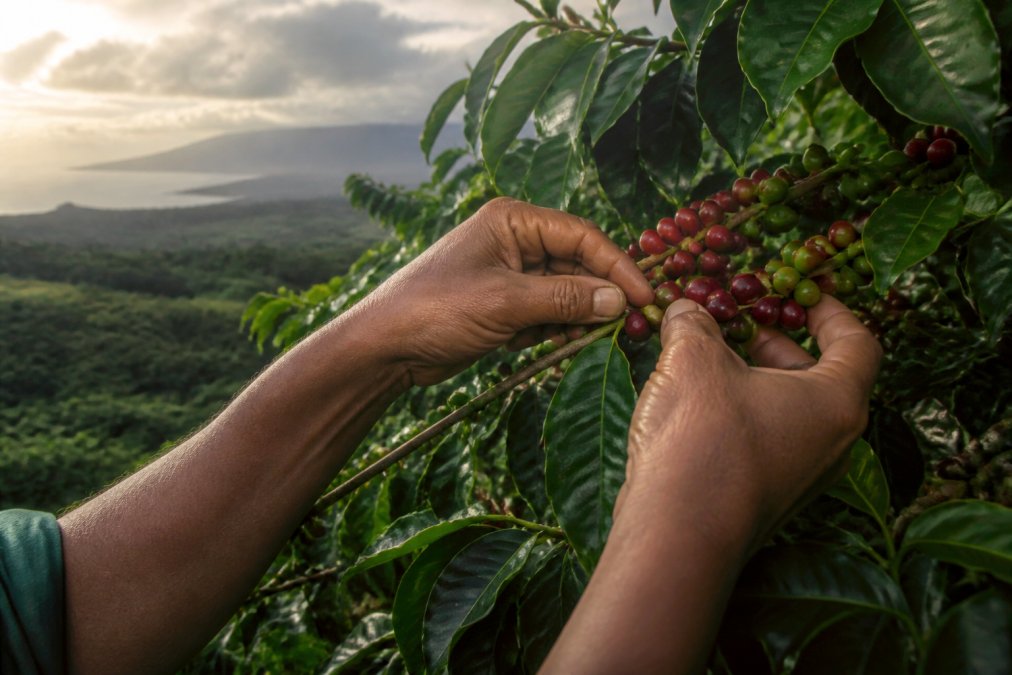
A single worker might hand-pick 100 pounds of cherry per day on Kona slopes. In flat regions, mechanical harvesters process tons per hour. The labor math is straightforward: hand-picking costs substantially more per pound of finished coffee. These labor costs are built into every bag.
Processing methods add another cost layer. Wet processing, the preferred method for premium Kona, requires washing, fermentation, and careful drying. This is more labor-intensive than dry milling used for lower-grade coffees. The wet process preserves the delicate flavor compounds that make Kona coffee distinctive, but it demands more infrastructure, more monitoring, and more skilled workers.
Small-batch roasting compounds the cost structure further. Kona Crown Coffee roasts weekly in small quantities rather than roasting massive batches. This approach preserves freshness and allows precise roast profiles for different bean grades, but it requires more frequent roasting runs and higher per-unit roasting costs than industrial-scale operations.
Kona Coffee Grading Standards and Quality Control
The State of Hawaii enforces strict grading standards for coffee bearing the Kona designation. Beans are sorted into Extra Fancy, Fancy, Prime, and lower grades based on size uniformity and visual defects. Extra Fancy beans, the largest and most uniform, command the highest prices because they roast most evenly and produce the cleanest cup.

Grading isn't cosmetic, it directly affects what you taste. Uniform bean size means uniform roasting. When all beans absorb heat at similar rates, the roast profile becomes predictable. Defective or undersized beans roast unevenly, creating sour or burnt flavors that compromise the entire batch. This is why Extra Fancy Kona costs more than Prime or Fancy grade; the consistency is worth the premium.
Quality control happens at multiple stages. Beans are inspected after harvest, after processing, after drying, and after roasting. Each step filters out substandard lots. This rigorous grading and inspection process adds labor and overhead. Commodity coffee producers skip many of these steps to reduce costs. Kona producers cannot; the market expects and legally requires documented quality standards.
100% Kona Coffee - Reserve - Medium →
The grading process is transparent and verifiable. Buyers can request documentation proving their coffee meets Extra Fancy standards. This traceability adds cost but eliminates the risk of purchasing mislabeled or blended coffee. When you buy 100% Kona, you're paying for the assurance that the beans actually meet the standard, and now you know whether that assurance justifies the price tier you're choosing.
The Difference Between 100% Kona and Kona Blends
Here's where the pricing trap catches most buyers. A product labeled "Kona blend" contains as little as 10% Kona coffee mixed with cheaper beans from other regions. The label is technically legal, it discloses that Kona is present, but the implication is deceptive. Consumers assume "Kona blend" means mostly Kona. It usually doesn't.
100% Kona coffee delivers the complete flavor expression. Every bean contributes to the smooth, balanced cup with chocolate and fruit notes. There's no dilution, no compromise. The sensory difference between 10% Kona blend and 100% Kona is substantial, far larger than the price difference suggests.
The why-is-100%-kona-coffee-so-expensive question often reflects frustration with blended products.
How to Spot Fake Kona Coffee and Verify Authenticity
Spotting fake Kona coffee requires attention to three details: the label, the price, and the source.
Supply, Demand, and the Economics of Premium Pricing
The economics of Kona coffee pricing are straightforward: demand exceeds supply, and supply cannot easily expand. But understanding the price requires seeing where the money actually goes.
-
Farmer/producer (40-50%): $9.60-$12.00. This covers land costs, labor for hand-picking, processing equipment, drying infrastructure, and grading. A Kona farmer's land and property taxes are substantially higher than coffee farmers in Central America or Southeast Asia. Real estate in the Kona region averages $15,000-$25,000 per acre. These fixed costs are absorbed into the price per pound whether production is high or low.
-
Roaster (15-20%): $3.60-$4.80. This covers roasting equipment, electricity, labor, packaging, and the roaster's margin. Small-batch roasting (weekly runs in quantities of 50-200 pounds) costs more per unit than industrial roasting (daily runs of 5,000+ pounds). Freshness preservation and precise roast profiles for different bean grades require more frequent roasting runs and higher per-unit roasting costs than commodity operations.
-
Shipping and logistics (10-15%): $2.40-$3.60. Shipping coffee from Hawaii to mainland markets costs more than shipping from Central America or Southeast Asia. Freight, handling, refrigeration to prevent moisture absorption, and regulatory compliance add expense. Two-day FedEx shipping to preserve freshness costs significantly more than standard ground shipping.
-
Retail markup and overhead (15-25%): $3.60-$6.00. This covers the retailer's cost of goods sold, website or storefront overhead, customer service, returns, and profit margin. Direct-to-consumer roasters capture this margin themselves; retailers selling roaster-supplied coffee pass it to the consumer.
Conclusion
100% Kona coffee costs more because every factor in its production, geography, soil, labor, processing, quality control, and supply constraints, is fundamentally different from commodity coffee. These aren't marketing justifications. They're structural realities that make premium pricing inevitable and justified.
Frequently Asked Questions
Is 100% Kona coffee really worth the higher price point?
Yes, if you value sensory clarity and freshness. 100% Kona coffee from single-origin farms delivers a distinctly mellow flavor with balanced acidity that commodity coffee cannot match. The premium reflects genuine agricultural costs: hand-picked harvesting on volcanic slopes, strict Extra Fancy grading, and small-batch processing. Small-batch roasting and 2-day shipping ensure maximum freshness. If you enjoy nuanced coffee and want to support sustainable farming practices, the investment justifies itself cup after cup.
How can I identify authentic 100% Kona coffee versus blends?
Check for Hawaii State certification on the label or packaging. Blends will say 'Kona blend' or 'contains X% Kona', anything less than 100% is a blend. Look for grading marks (Extra Fancy or Fancy). Reputable roasters like Kona Crown Coffee provide traceability back to their farm. If the price seems too low for 100% Kona, it's likely a blend or counterfeit.
What makes Kona coffee's volcanic soil and microclimate so special?
The volcanic soil on the slopes of Hualalai is rich in minerals and naturally well-draining, which forces coffee roots to grow deeper and develop complex flavor compounds. The microclimate, cool mornings, afternoon sun, and consistent moisture from trade winds, slows bean growth, concentrating sugars and acidity into a balanced profile with pronounced notes of chocolate and fruit. These conditions are geographically exclusive to a small belt on the island, which cannot be replicated elsewhere. This terroir is why Kona coffee tastes distinctly different from coffee grown in other regions.
Why is hand-picking so expensive compared to commercial coffee production?
Hand-picking selects only ripe coffee cherries, leaving unripe ones to mature for later harvest. Commercial farms use mechanical harvesting, which strips all cherries at once, mixing ripe and unripe beans and lowering quality. Hand-picking in steep volcanic terrain requires skilled labor and multiple passes through the same trees over weeks. Labor costs are substantially higher because workers must navigate difficult slopes and work carefully. This labor-intensive process is the primary driver of cost, but it directly produces the superior cup quality that justifies the premium price.