
Table of Contents
- Why a Single Origin Kona Coffee Subscription Service Changes Your Morning Cup
- Quick Comparison: Kona Crown Coffee Subscription Options
- How to Choose Kona Coffee Beans for Your Subscription
- Kona Coffee vs. Kona Blend: What the Label Actually Tells You
- Coffee Subscription Frequency: Finding Your Ideal Delivery Schedule
- Fresh Roasted Kona Coffee: Why Roast Date and Shipping Speed Matter
- Kona Crown Coffee Subscription Plans: Pricing and What You Get
- Conclusion
- Frequently Asked Questions
Last Updated: October 5, 2026
Why a Single Origin Kona Coffee Subscription Service Changes Your Morning Cup
A single origin Kona coffee subscription service delivers 100% Kona beans from one farm, roasted in small batches and shipped on a recurring schedule, so every cup tastes like the specific farm it came from rather than a blend of anonymous beans. At Kona Crown Coffee, we roast weekly on our family-owned 42-acre farm on the slopes of Hualalai and ship within two days, which is the difference between coffee that tastes alive and coffee that tastes like the warehouse it sat in.
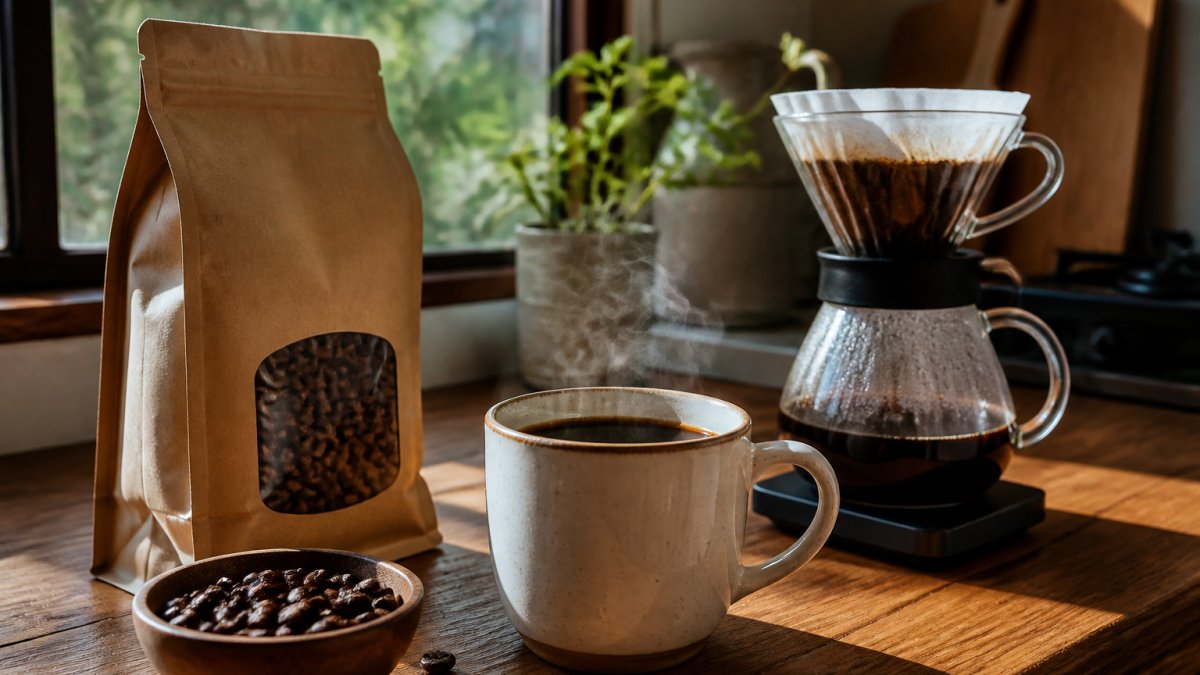
Here's what most guides get wrong. They treat "Kona coffee" as a single flavor when it's actually a category with wildly different quality tiers. A subscription solves the freshness problem, but only if the beans are genuinely single origin.
Quick Comparison: Kona Crown Coffee Subscription Options
Every Kona Crown Coffee subscription starts with the same foundation: 100% Kona beans grown on our farm, small-batch roasted weekly, and shipped via 2-day FedEx. What changes is the roast and the grade. Here's how our options line up.
| Option | Price | Roast | Best For |
|---|---|---|---|
| Estate Medium Dark | $18.95 | Medium Dark | Drip, French press, everyday drinking |
| Reserve Medium Light | $19.95 | Medium Light | Pour-over, cold brew, bright flavor |
| Reserve Medium | $19.95 | Medium | Versatile all-rounder, any brew method |
| Reserve Peaberry | $22.00 | Medium Light to Medium | Rare, full-bodied, limited quantities |
| Reserve Crown Roast | $19.95 | Espresso blend | Espresso, rich full-bodied shots |
| Roast Discovery Sampler | $61.95 | All four roasts | Trying before committing, gifts |
Hawaii Department of Agriculture coffee labeling rules

How to Choose Kona Coffee Beans for Your Subscription
Choosing Kona coffee beans comes down to two decisions: roast level and bean grade. Get those right and the subscription practically runs itself. Get them wrong and you'll blame the coffee for a mismatch that was really about your brew method.
Roast Level: Match the Bean to Your Brew Method
Roast level determines how much of the bean's natural character survives the roasting process. Lighter roasts preserve brightness and acidity, while darker roasts build body and sweetness.
- Medium Light suits pour-over and cold brew, where you want citrus and floral notes to come through
- Medium is the safe bet if you switch between drip, pour-over, and French press
- Medium Dark gives you raw sugar and brown malt notes that hold up in a French press
Our Reserve Medium Light shows pronounced chocolate, fruit, and a hint of floral undertones. That's a light roast doing exactly what it should.

Bean Grade and Farm Traceability
Bean grade tells you about size and uniformity, which affects how evenly the coffee roasts. Extra Fancy and Fancy beans are the largest and most uniform, which is why they produce a smoother, more balanced cup. Prime grade has more natural variation and roasts beautifully for everyday drinking.
Traceability matters more than grade for most buyers. You want to know the farm, not just the island.
Kona Coffee vs. Kona Blend: What the Label Actually Tells You
Kona coffee is 100% Kona-grown beans. A Kona blend is a mix of Kona beans and cheaper coffee from other regions. The label is the only thing standing between you and a bag of expensive impostor beans, and the label rules are stricter than most shoppers realize.
The Labeling Rules, in Plain Terms
Under the federal standard of identity for "Kona" coffee (21 CFR 130.10 style common-name rules enforced by FDA), and Hawaii's own coffee labeling law (HRS Chapter 486, administered by the Hawaii Department of Agriculture), a package can only say "100% Kona" if every bean inside was grown in the Kona district on the Island of Hawaii.
That means the phrase "Kona coffee" on a front label, without a percentage, is the single biggest red flag in this category. It's not illegal marketing, it's just deliberately vague, and it's designed to let a $9 bag ride the reputation of a $35 bag.
How to Verify Genuine 100% Kona, Step by Step
- Read the front label for the percentage, not the word. "100% Kona" is a claim. "Kona" alone is not.
- Look for the state seal or certification number. Hawaii-licensed coffee dealers are required to register, and certified green beans carry inspection records from the Hawaii Department of Agriculture. A legitimate roaster can produce that paper trail on request.
- Ask for the farm name and district. Kona is a specific growing region, roughly a 20-mile belt on the western slopes of Hualalai and Mauna Loa, generally between 700 and 3,500 feet elevation. A roaster who can't name the farm is almost certainly buying commodity green from a broker.
Why This Matters More for Subscriptions Than One-Time Buys
With a one-time bag, a blend is a $20 mistake. With a subscription, it's a recurring mistake, you're auto-shipping the same diluted product every two to four weeks until you notice.
Our green estate beans are inspected and graded by the State of Hawaii, and every subscription bag carries the farm name, the district, and the roast date. That's the paper trail a blend can't produce.
Hawaii Department of Agriculture coffee labeling rules
FDA standards of identity for coffee
Coffee Subscription Frequency: Finding Your Ideal Delivery Schedule
Coffee subscription frequency should match how fast you actually drink coffee, not how fast you think you should. But with Kona, frequency is also an economics decision, because you're paying a premium per ounce, and shipping a small bag every two weeks costs more per cup than shipping a larger bag every four.
Start With Your Actual Consumption
A household brewing one cup a day goes through roughly a pound every three to four weeks. A two-cup household finishes a pound in about two weeks. Most subscribers start too frequent, then dial back once they see bags stacking up. We'd rather you start slower and increase than the reverse.
| Household | Cups Per Day | Suggested Frequency |
|---|---|---|
| Solo, light drinker | 1 | Every 4 weeks |
| Solo, daily habit | 2 | Every 2-3 weeks |
| Couple | 3-4 | Every 2 weeks |
| Entertaining household | 5+ | Every 1-2 weeks |
The Kona-Specific Math Most Guides Skip
At roughly $19-$22 per 12-ounce bag, Kona runs two to three times the price of a typical grocery-store single origin. That changes the frequency calculus in three ways:
100% Kona Coffee - Estate Medium Dark Roast →
- Shipping cost per ounce falls as bag size rises. A flat 2-day shipping fee spread across two bags costs half as much per ounce as the same fee on one bag. If your plan allows multi-bag shipments, batching is usually cheaper than shipping more often.
- Minimum commitment matters more than frequency. A plan that requires three deliveries before you can cancel locks you into roughly $60-$70 minimum, plus shipping. A plan with no minimum lets you test one delivery and walk away. Read the commitment terms before the frequency options.
- Free-shipping thresholds are the real lever. Many roasters waive shipping above a cart minimum. If yours does, sizing your delivery to clear that threshold often beats optimizing the calendar.
How to Adjust, Skip, or Cancel Your Plan
A subscription you can't control is a subscription you'll resent. Look for these controls before you commit:
- Skip a delivery when you're traveling or overstocked
- Reschedule a delivery to land after a vacation
- Edit your roast or grind without canceling
Freshness is the whole point of a subscription. If you can't pause it, you'll end up with stale coffee and a bad taste for the model itself. If you can't cancel it in two clicks, you'll end up with a bad taste for the roaster.
Fresh Roasted Kona Coffee: Why Roast Date and Shipping Speed Matter
Fresh roasted Kona coffee peaks in flavor roughly 4 to 14 days after roasting. Before that window, the beans are still degassing. After it, oxidation starts flattening the aromatics that make Kona worth the price.
That timeline is why shipping speed isn't a nice-to-have. A slow carrier adds days of sitting in a warehouse, and those are days off the front of your flavor window.
We roast weekly in small batches and ship via 2-day FedEx for exactly this reason. Whole bean keeps its character longer than ground, so grind just before brewing if you can.
Kona Crown Coffee Subscription Plans: Pricing and What You Get
Kona Crown Coffee is our top pick for a single origin Kona coffee subscription because we control every step: the farm, the roast, and the delivery.
What sets our subscription apart:
- 100% Kona, no blends. Every bag is single origin from our farm.
- Small-batch weekly roasting. Your beans are roasted close to your ship date, not months before.
- 2-day FedEx shipping. The roast window arrives intact.
Where we're honest about the trade-off: our Reserve Peaberry comes in very limited quantities, and it sells out.

For most subscribers, we'd start with the Reserve Medium. It's versatile across drip, pour-over, espresso, and French press, so you learn your preference before committing to a single roast.
Kona Coffee Cultural Festival
Conclusion
The hard part of a Kona subscription isn't the coffee. It's trusting that what arrives is genuinely 100% Kona, roasted recently, and shipped fast enough to matter.
Kona Crown Coffee solves both problems directly. We grow on our own 42-acre farm, roast in small batches every week, and ship via 2-day FedEx so your beans land inside their peak flavor window.
Get started with Kona Crown Coffee and taste what single origin Kona is supposed to be.
Frequently Asked Questions
How can you tell if Kona coffee is 100% Kona?
Look for Hawaii State certification on the packaging. The State of Hawaii inspects and grades every lot of authentic Kona coffee, and legitimate sellers display this certification. Kona Crown Coffee's green beans carry this state certification, and their roasted coffees come from a family-owned 42-acre farm on the slopes of Hualalai. If a bag says 'Kona blend' without a percentage, it likely contains mostly cheaper imported beans with only a small amount of Kona mixed in.
How often should a coffee subscription deliver fresh beans?
For most households drinking one to two cups daily, a monthly delivery of 12 to 16 ounces works well. Heavier drinkers or those who brew for two may prefer a biweekly schedule. The key is matching coffee subscription frequency to how fast you actually consume a bag. Kona Crown Coffee roasts in small batches weekly and ships via 2-day FedEx, so your beans arrive within days of roasting rather than sitting in a warehouse.
Is a Kona coffee subscription worth it compared to buying one bag at a time?
A subscription ensures you never run out and often locks in consistent access to limited-harvest coffees like Peaberry, which represents only 5-10% of the crop. If you drink Kona regularly, recurring delivery removes the friction of reordering and keeps fresh roasted Kona coffee arriving on schedule. If you only drink it occasionally, a one-time purchase or a sampler pack like the Roast Discovery Sampler gives you flexibility without commitment.
What should I look for in a single-origin coffee subscription?
Check four things: origin transparency (specific farm and region, not just 'Hawaii'), roast date versus best-by date, delivery frequency options, and whether you can skip, reschedule, or cancel without penalties. Single-origin coffee means the beans come from one source, not a blend of regions. Kona Crown Coffee lists farm-level provenance, roasts weekly, and ships directly from their Holualoa farm so you can verify freshness at every step.
Can I switch roast levels or coffee varieties between deliveries?
With most flexible subscription services, yes. Kona Crown Coffee offers Medium Light, Medium, Medium Dark, Crown Roast espresso blend, and Peaberry, so you can rotate through roast levels as your taste evolves. If you are unsure where to start, the Roast Discovery Sampler Pack includes four 3.5-ounce bags across all roast profiles, letting you compare flavor side by side before committing to a recurring plan.