
Last Updated: October 28, 2026
Quick Summary
Premium coffee beans are graded for defect count, screen size, and cup quality rather than sold as a commodity blend, and specialty grade means an SCA score of 80 or above, roughly the top 5% of coffee worldwide. For home roasters, they set the ceiling on what your roast can achieve.
- Kona Crown Coffee's Hawaii State-Certified Kona green coffee beans are officially inspected and graded by the State of Hawaii.
- A 2020 study found a drum roaster produced the highest cup quality for specialty beans at a medium roast degree.
- Medium roast is the sweet spot for Kona and most Latin American lots, with development time around 20-25% of total.
- Green coffee stores best at roughly 10-12% moisture, and a lot harvested within the last 12 months is current crop.
- Our 100% Kona green beans are $42.00 and Hawaii State-Certified.
Table of Contents
- Why Premium Coffee Beans for Home Roasters Change the Cup
- Green Coffee Beans for Home Roasting: What to Look For
- How to Choose the Best Green Coffee Beans by Origin and Roast Level
- How to Store Green Coffee Beans Before Roasting
- How to Store Fresh Roasted Coffee Beans for Peak Flavor
- What Premium Coffee Beans Cost and How to Compare Value
- Common Mistakes Home Roasters Make With Premium Beans
- Choosing Your First Batch of Kona Green Beans
- Frequently Asked Questions
Why Premium Coffee Beans for Home Roasters Change the Cup
The coffee roaster market hit $1.6 billion in 2026 and is projected to reach $2.7 billion by 2033, according to Grand View Research's coffee roaster market report. That growth tracks a simple truth: the bean you start with sets the ceiling on what your roast can achieve.
At Kona Crown Coffee, we farm and roast on a family-owned 42-acre operation.
Below, we'll show you how to judge green coffee, match it to your roast goals, store it, and compare value per pound.
Premium coffee beans are beans graded for defect count, screen size, and cup quality rather than sold as a commodity blend. Specialty grade, the tier most home roasters chase, means an SCA score of 80 or above, roughly the top 5% of coffee worldwide, per Bean Box's coffee bean buying guide.
Green Coffee Beans for Home Roasting: What to Look For
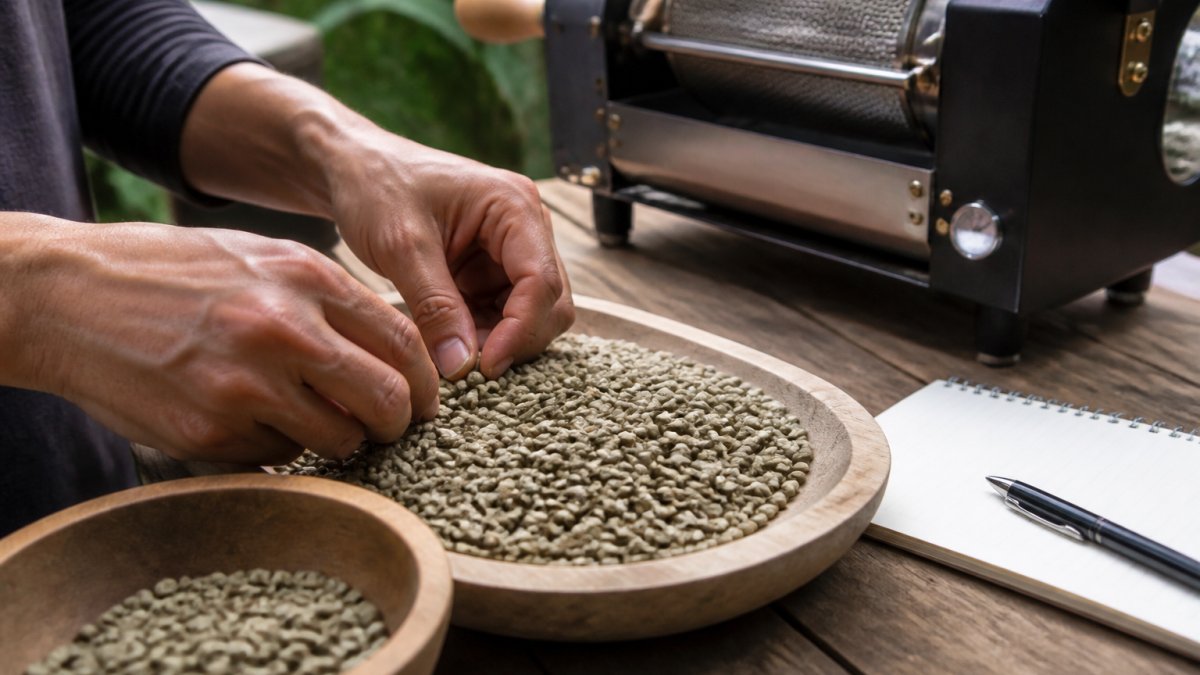
Then check the paperwork. A serious green coffee listing names the farm or cooperative, the harvest year, the processing method, and the grade. If a seller can't tell you the harvest year, assume it's older than you'd like.
Grades, Lot Specs, and What They Mean for Your Roast
Kona Crown Coffee's Hawaii State-Certified Kona green coffee beans are officially inspected and graded by the State of Hawaii. Extra Fancy beans are the largest and most uniform; Prime beans show more natural variation.
How to Choose the Best Green Coffee Beans by Origin and Roast Level
Arabica dominates specialty shelves for its sweetness and acidity. Robusta brings crema and punch to espresso blends but tastes harsher and carries more caffeine. For home roasting, start with Arabica.
Matching Origin and Processing Method to Your Roast Profile
A 2020 study in PMC's research on roasting technologies and cup quality found that a drum roaster produced the highest cup quality for specialty beans at a medium roast degree. That's a useful default: medium roast, drum-style agitation, and a bean with enough quality to show through.
Roast-Development Goals by Bean Type
- Light roast (city to city+): Aim to drop beans shortly after first crack ends, with development time around 15-20% of total roast time. Best for high-acidity African lots and washed Latin American coffees where you want origin clarity. Expect grassy or vegetal notes if development is too short.
- Medium roast (full city to full city+): Carry the roast a bit past first crack, with development time around 20-25% of total. This is the sweet spot for Kona and most Latin American lots, balancing sweetness, body, and origin character. Most home roasters find medium roast forgiving across drum and air roasters.
- Medium-dark to dark (Vienna to French): Extend development past 25% and expect origin character to give way to roast-driven chocolate, caramel, and smoke. Reserve this for blends, espresso bases, or robusta-heavy lots where you want body over terroir. Avoid dark-roasting expensive single-origin lots; you'll spend premium money for supermarket flavor.
How to Store Green Coffee Beans Before Roasting
Green coffee is more forgiving than roasted coffee but not immortal. Store it in a breathable container or a valve bag at room temperature, away from light and moisture, and keep it out of the refrigerator, where condensation and food odors do damage.
100% Kona Coffee Green Estate Beans for Home Roasters - Hawai'i State Certified →
Green-Coffee-Specific Storage Criteria
- Harvest date over roast date: Green coffee doesn't have a roast date, so the harvest year is your freshness marker. A lot harvested within the last 12 months is generally considered current crop; anything older is past crop and may roast flat or unevenly. Ask the seller for the harvest year before you buy.
- Moisture content: Green coffee stores best at roughly 10-12% moisture. Beans that are too dry roast faster and lose origin character; beans that are too wet can mold. You can't measure moisture at home without a meter, but you can watch for visual cues: faded color, papery smell, and brittle beans suggest moisture loss.
- Container type: Breathable containers (cotton bags, burlap, valve bags) let green coffee off-gas and stabilize. Airtight plastic bins can trap moisture and cause condensation if the beans were stored cool before sealing. If you use a sealed container, make sure the beans are at room temperature and dry before sealing.
- Temperature and light: A cool, dark closet or pantry is ideal. Avoid garages, attics, and windowsills where temperature swings are large. Light degrades green coffee over time, so opaque containers beat clear ones.
- Batch size: Buy in quantities you'll roast within three to six months. A year of shelf life doesn't mean a year of peak quality; most home roasters notice flattening after six months even with good storage.
How to Tell If Green Coffee Has Gone Past Its Prime
Store green coffee in a cool, dark, dry spot, keep it in a breathable or well-sealed container, and track harvest dates. For specific guidance on storing Kona coffee beans for lasting freshness, read our dedicated article. Those habits protect the premium you paid for and give your roasts a consistent starting point.
How to Store Fresh Roasted Coffee Beans for Peak Flavor
Freshly roasted beans are at their best within days, not months. The enemy is oxygen, and the fix is simple: an airtight container, a cool dark spot, and small batches. For a deeper guide on storing freshly roasted beans to preserve flavor, see our full article.
What Premium Coffee Beans Cost and How to Compare Value
| What You're Comparing | Green Coffee | Freshly Roasted |
|---|---|---|
| Cost per pound | Lower | Higher |
| Shelf life | About a year | Weeks |
| Freshness control | You roast it | Roaster's ship date |
| Best for | Hobbyist roasters | Convenience |
Our 100% Kona green beans are $42.00. They are Hawaii State-Certified. If you want to learn more, see our piece on why Kona coffee costs more.
Common Mistakes Home Roasters Make With Premium Beans
- Roasting beans of different sizes together, which produces uneven development
- Skipping first crack tracking and guessing on timing, see our guide on how to roast artisan coffee at home for practical help
- Buying more green coffee than you can roast before it fades
- Storing roasted beans in the fridge door, where temperature swings and odors live
Choosing Your First Batch of Kona Green Beans
The product listing describes Prime as having more natural variation and being suited to home roasting, Fancy as suited to artisan roasting and single-origin offerings, and Extra Fancy as suited to showcase batches.
Our 100% Kona Coffee Green Estate Beans for Home Roasters are Hawaii State-Certified. Each lot is officially inspected and graded by the State of Hawaii, ensuring authenticity and traceability.

Frequently Asked Questions
Should home roasters buy green or roasted coffee beans?
If you want to roast at home, Kona Crown Coffee offers green beans. If you want roasted coffee, Kona Crown Coffee small-batch roasts weekly and ships via 2-day FedEx.
How much do premium coffee beans for home roasting cost?
Kona Crown Coffee's Hawai'i State-Certified Kona green beans are listed at $42.00. The product listing describes the beans as grown, harvested, and processed on the family farm, and says each lot is inspected and graded by the State of Hawaii.
How should you store green coffee beans before roasting?
Keep green coffee beans in a breathable container or a loosely sealed bag away from light, heat, and moisture. A cool, dry pantry between 60 and 70°F works well for short-term storage. For longer holds, seal them in airtight bags and freeze. Avoid the refrigerator, where humidity and food odors can degrade the beans before they ever reach your roaster.
How long should roasted coffee beans rest before brewing?
Most home roasters rest beans 2 to 5 days after roasting. During this time, carbon dioxide escapes and flavor settles. Light roasts often peak around day 4 to 7, while dark roasts drink well sooner. Store fresh roasted coffee beans in an airtight container with a one-way valve at room temperature, and grind just before brewing for the clearest flavor notes.
The gap between a forgettable cup and a memorable one usually comes down to sourcing. If you want green coffee you can trace to a specific farm, graded by the state, and shipped fresh, Kona Crown Coffee offers 100% Kona green beans from our family-owned farm, backed by award-winning coffee three years running. Get started with Kona Crown Coffee and roast a batch you'll actually taste the difference in.
