
Table of Contents
- Why Is Kona Coffee More Expensive? A Transparent Cost Breakdown
- Hand-Picking, Processing, and the Labor Behind Every Bean
- Hawaii Land Costs, Property Taxes, and Minimum Wage
- Limited Supply and Growing Demand for Authentic Kona Coffee
- 100% Kona Coffee Price: What You'll Actually Pay
- Kona Coffee vs. Kona Blend: Labeling Rules Explained
- Is Kona Coffee Worth It? Comparing It to Other Specialty Coffees
- How to Buy Kona Coffee Without Getting Burned
- Frequently Asked Questions
Last Updated: October 16, 2026
Why Is Kona Coffee More Expensive? A Transparent Cost Breakdown
Kona coffee costs more because it is grown on some of the most expensive agricultural land in the United States, picked entirely by hand, and produced in tiny volumes compared with coffee from large growing regions. At Kona Crown Coffee, we farm a family-owned 42-acre plot on the slopes of Hualalai, and we field the same question constantly: why does a pound cost what it does? Below, we'll show you exactly where each dollar goes, and how to tell a genuine 100% Kona bag from a blend that only sounds like one.
The short answer is that no single factor explains the premium. It is a stack of costs that compound: scarce land, expensive labor, low yield per acre, and a harvest that cannot be mechanized. Understanding that stack is the difference between paying for authenticity and paying for a label.
Where Kona Coffee Grows and Why Terroir Matters
Kona coffee is coffee grown in the Kona district on the western slope of the Big Island of Hawaii, typically between roughly 700 and 2,500 feet of elevation. The growing region is narrow, perhaps a few miles wide and about 20 miles long, which caps how much coffee the district can ever produce.
Terroir here means volcanic soil, afternoon cloud cover that shields the trees from harsh sun, and mild nights that slow cherry development. Slower growth concentrates sugars and acids in the bean, which is why Kona coffee is known for a smooth body and bright, clean cup rather than the heavy, earthy profile of some other origins. The same conditions that make the coffee distinctive also limit where it can be grown, and that limitation is baked into the price from the first day of planting.
An Itemized Look at What You're Paying For
Think of the retail price as five cost layers stacked on top of each other. Land and property taxes sit at the bottom. Labor, the most expensive single input, sits above it. Then processing and roasting, then packaging and shipping, and finally the margin that keeps a farm operating for another season.
| Cost Layer | What Drives It | Why It's Higher Than Other Origins |
|---|---|---|
| Land and property taxes | Scarce, high-value real estate | Little arable land; strong demand for coastal and hillside parcels |
| Harvest labor | Entirely hand-picked | Uneven ripening; steep terrain blocks mechanical harvesters |
| Processing and roasting | Small-batch milling, grading, and roasting | Low volume means fixed costs spread across fewer pounds |
| Packaging and shipping | Small lots, expedited delivery | Perishable freshness goals favor fast shipping |
| Farm margin | Reinvestment and survival | Needed to keep a small operation viable year to year |
That table is the whole argument in miniature. Every layer is a real expense, and none of them shrink just because the coffee is famous.
Hand-Picking, Processing, and the Labor Behind Every Bean
Labor is the largest single reason Kona coffee costs what it does. Coffee cherries on a single tree ripen at different times, so a picker must return to the same tree again and again across the season, selecting only the ripe red fruit by hand. A machine cannot do this job on Kona's terrain, and even where machines exist elsewhere, they strip unripe fruit along with the ripe, which lowers cup quality.
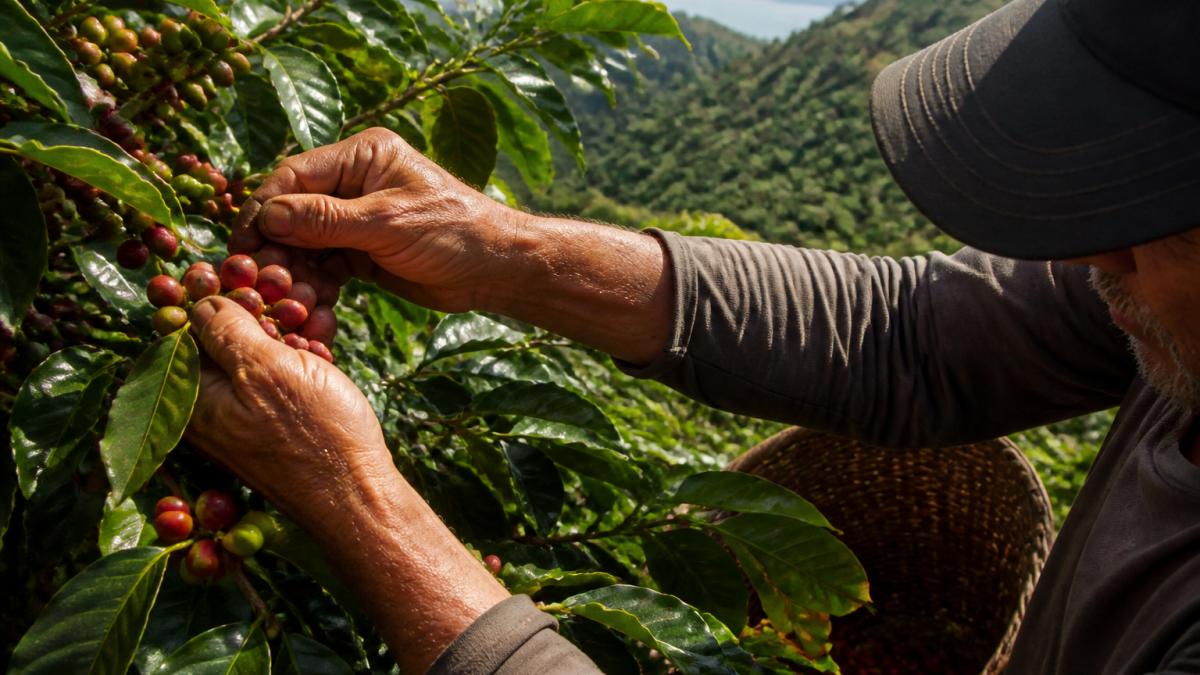
Why Coffee Cherries Are Harvested by Hand
Hand-picking protects quality, but it comes at a cost that never goes down. Each picker moves slowly through the rows, and the same tree may be visited many times over a harvest. That repetition is the price of consistency: only fully ripe cherries make it into the mill, which is what gives Kona coffee its clean, balanced flavor instead of a green, vegetal edge.
Processing, Roasting, and Quality Grading Costs
After picking, cherries are processed, typically by removing the fruit and drying the seed, then milling and grading the beans by size and defect count. Higher grades command higher prices because they represent a smaller share of the harvest. Roasting adds another layer: small-batch roasting means more labor per pound and more attention per batch, which is exactly the tradeoff a specialty roaster accepts to protect flavor.
Hawaii Land Costs, Property Taxes, and Minimum Wage
Land is the quiet cost that shapes everything else. Agricultural parcels in the Kona district are among the most valuable in the state, and property taxes on that land are a fixed annual expense regardless of whether the harvest is good.
Labor rules add to that floor. Hawaii's minimum wage has risen in steps in recent years, and farms that pay above it to attract and retain skilled pickers carry a higher payroll. For the current minimum wage figure and its scheduled changes, check the Hawaii Department of Labor and Industrial Relations wage standards, since the rate adjusts on a set schedule.
The practical result: a Kona farm's cost floor is set by land and labor long before anyone tastes the coffee.
Limited Supply and Growing Demand for Authentic Kona Coffee
Supply is capped by geography, and that cap is the simplest explanation for the premium. The Kona district can only produce so much coffee, and much of that output is sold as blends rather than as 100% Kona. When demand for verified single-origin Kona rises, the price of the genuinely scarce product rises with it.
Scarcity also creates a market for imitation. A bag labeled only "Kona blend" may contain a small fraction of Kona beans and a much larger share of cheaper coffee from elsewhere, which is legal under labeling rules but confusing for buyers. That confusion is why the price gap between a true 100% Kona bag and a blend is so wide: one is the scarce product, the other mostly is not.
100% Kona Coffee Price: What You'll Actually Pay
A 100% Kona coffee price reflects the full cost stack, which is why it runs well above commodity coffee and above most specialty single origins. The number moves with grade, roast, package size, and sales channel, so comparing two bags requires matching all four.
100 % Kona Coffee Darnall Reserve Peaberry →
Prices by Product Type and Sales Channel
Where you buy changes the price as much as what you buy. Farm-direct purchases cut out distributor margins but add shipping, while retail shelves add handling and markup. Here is how our own lineup is priced, so you can see the range in practice:
| Product | Roast | Price | Best For |
|---|---|---|---|
| 100% Kona Coffee - Estate Medium Dark | Medium Dark | $18.95 | Everyday drip and French press drinkers |
| 100% Kona Coffee - Reserve - Medium | Medium | $19.95 | Versatile brewing across methods |
| 100% Kona Coffee - Reserve - Medium Light | Medium Light | $19.95 | Pour-over and cold brew |
| 100% Kona Coffee Darnall Reserve Peaberry | Medium Light to Medium | $22.00 | Rare, limited-lot drinking and gifting |
Notice that the spread between our entry roast and our rarest lot is only a few dollars. The premium you pay for Kona is in the origin itself, not in a luxury markup tacked on at the top.


Kona Coffee vs. Kona Blend: Labeling Rules Explained
The difference between Kona coffee and a Kona blend comes down to labeling law, not marketing language. A product labeled "100% Kona" must be entirely Kona-grown. A product labeled "Kona blend" only needs to contain some Kona coffee, and the rules do not require the blend to disclose what percentage, which is why blends can sell for a fraction of the price.
This is the single most useful thing to know before you buy. If you want the real thing, look for the words "100% Kona" and a named farm or estate. If a label leans on the word "Kona" without those specifics, you are likely buying mostly something else. For the formal labeling standards, see the Hawaii Department of Agriculture coffee labeling rules.
Is Kona Coffee Worth It? Comparing It to Other Specialty Coffees
Is Kona coffee worth it? For drinkers who value a smooth, balanced, low-bitterness cup and want a verifiable single origin, yes. For someone who primarily wants caffeine at the lowest cost per pound, no, and no honest roaster will pretend otherwise.
Compared with other specialty coffees, Kona sits at the high end for a specific reason: it is one of the few origins where scarcity, hand labor, and high land costs all apply at once. Other premium single origins may match Kona on cup quality, but few combine that quality with such a small, tightly defined growing region. That combination is what you are paying for, and it is also why the price is unlikely to fall.
How to Buy Kona Coffee Without Getting Burned
Buying well comes down to four checks, and they take about thirty seconds.
A few practical habits separate a good purchase from a disappointing one:
- Confirm the label says "100% Kona," not "Kona blend" or "Kona roast"
- Check for a roast date and buy the freshest bag you can find
- Match the roast to your brewing method: lighter for pour-over, darker for espresso and French press
- Buy from a seller who names the farm, since anonymity is where blends hide
- Start with a smaller bag before committing to a bulk order
We roast in small batches weekly and ship within two days so the bag that arrives tastes like the bag we cupped, which is the only way a premium price makes sense. For broader guidance on origin labeling and coffee standards, the Specialty Coffee Association resources are a useful reference.
Kona coffee is expensive because it genuinely costs more to produce, and no amount of clever marketing can change the math of scarce land and hand labor. Start with our Estate Medium Dark for everyday brewing, or try the limited Reserve Peaberry if you want the rarest lot we grow.
Frequently Asked Questions
Why is 100% Kona coffee so expensive compared to regular coffee?
The price reflects real costs that don't apply to mass-produced coffee. Kona coffee is grown in a small district on Hawaii Island, picked by hand because the terrain is too steep for machines, and processed in small batches. Land in the Kona district is among the most expensive agricultural land in the United States, and farm labor must be paid at Hawaii's minimum wage. Limited supply and strong demand push prices higher still.
How much does 100% Kona coffee cost per pound?
Prices vary by roast, grade, and where you buy. Farm-direct roasters often sell 100% Kona at prices like our Estate Medium Dark at $18.95 or our Reserve Peaberry at $22.00. Supermarket bags labeled 'Kona blend' cost less because they contain only a small percentage of Kona beans. Always check the label for '100% Kona' before comparing prices.
What is the difference between 100% Kona coffee and a Kona blend?
A bag labeled '100% Kona' must contain only coffee grown in the Kona district. A 'Kona blend' only needs a minimum percentage of Kona beans, often 10%, with the rest coming from cheaper origins. That's why blends cost far less. If the label doesn't state a percentage, assume it's low. For authentic flavor and value, look for '100% Kona' and a named farm or estate.
How can you tell if Kona coffee is authentic?
Start with the label: it should say '100% Kona' and ideally name the farm or estate. Check for a roast date rather than a generic best-by date, since freshness matters. Reputable roasters list the growing region and grade, such as Extra Fancy or Fancy. If the price seems too low for 100% Kona, it's likely a blend. Buying directly from a farm or estate is the most reliable way to verify authenticity.